
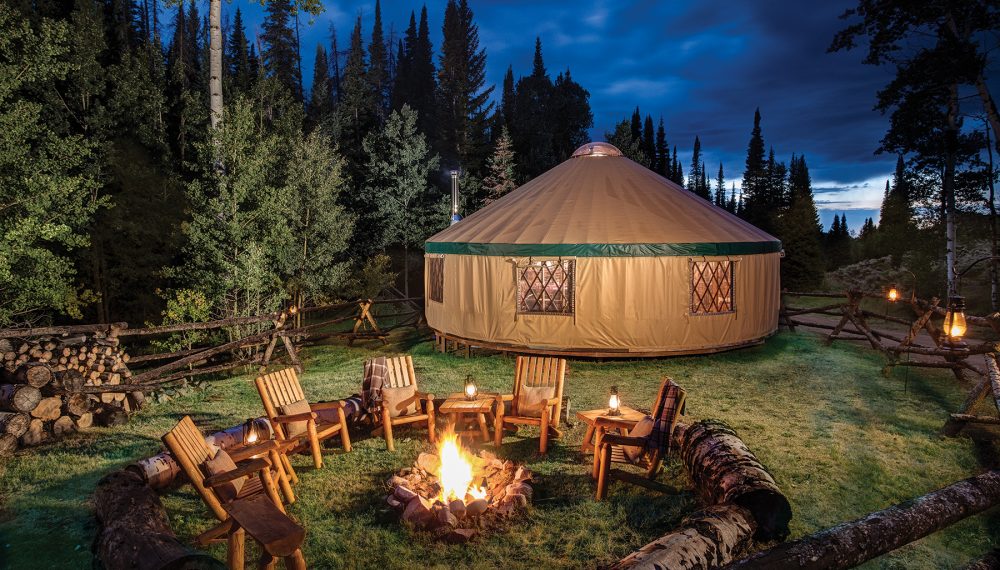

The kind of hotel can make or break a vacation. While the comforts of sameness is appealing, it’s not something inherently experiential. One could argue the opposite for the yurt – it’s a means to experiencing yet not necessarily enjoying the experience at the end of the day. Yet with specific accommodations of the yurt in play, location is critical.
This is because accommodations that have more to do with their location than what’s inside use their locations to their advantage in an almost exclusionary manner. However, less hospitable places are better than a traditionally constructed space. Thus, a place where surroundings don’t matter as much doesn’t work for conventional accommodations. It’s fine – better even – but yurts transcend this notion to make a special note of location.
Mountainous Areas
Mountains are places where humans have long enjoyed escapism and yes, yurts are easily adaptable to such spaces. There’s something ancient and modern about waking up in such a circular building with the peaks of mountains accentuating the rounded walls.
Mountains also create a different experience – the air quality is different – crisper – fogs roll in and out, sunshowers pop up in moments, and the quality of light up higher is only found on a mountain. Yet yurts located in mountains have wood-burning stoves – but this is less about heating and more about the action of keeping a flame going as winds pick up, sights shift, sounds happen, and scents occur outside.
Mountains also give return visitors a different experience every time. The summer brings wildflowers and longer sunlight. The winter renders such areas stark and silent as snow absorbs sound creating a quality unheard until one is outside in the dead of winter.
Coastal/Waterfront Areas
Water is a completely different feel than being in the mountains; there’s something constant about water – whether it be ocean, lake or river – that makes it different than being landlocked as it is with mountains. The same is true for being in a yurt with water in an open space or freezing down by the beach and recognizing when weather is literally coming for miles.
Coastal yurts are met with winds stronger than most – therefore reputable construction is key. Reputable tent makers like Beyond Yurt provide sound structures for more exposed locations as they’re built stronger and made of better quality materials without sacrificing comfort to avoid difficult conditions. This involves reinforced seams and planned adjustments that encourage guests to enjoy coastal drama without being caught up in its elements.
Yet water often shifts the rhythm of daily experience – there’s stillness that begs one to sit still and watch – the tide roll in or out or a boat pass by – all of those things create stillness that isn’t absent from hiking or going away from such experiences. The sense of movement is equally calming and transformative in thought.
Forested/Wooded Areas
Forests are restorative for many reasons – light filters differently, wind blows through trees making a lovely sound, dirt smells like dirt and plant material composts to restore the human nervous system like few other things can. It’s hard to explain but when therapeutic professionals suggest natural outings it’s because it’s highly noticeable when someone connects to nature.
Wooded yurts provide privacy. Where grass and dirt dominates trees so people know they have neighbors isn’t uncommon; yet those who stay in wooded yurts do so because there’s less likelihood they’ll see anyone else – and anything else, emphasizing the distance from reality to temporary accommodations.
This works best for those with social anxiety or therapeutic limitations who find crowds depleting but need genuine stillness to recharge. They don’t even experience the weather – just the quiet sound of rain on leaves – an invigorating deafening sound that somehow empowers guests instead of reminding them where they are – even if they’re keenly aware.
Rural/Agricultural Areas
Rural farms or working properties are less common locations for yurts but where they can be found on farm with animals, crops or otherwise emphasizes how land truly works and what’s appropriate for accommodations separate from tourism entirely.
The downside of this venue is that it’s no longer wilderness – it’s much more human-oriented as people walk on property for other options aside from actually allowing someone to escape what’s naturally going on. Some find this grounding and realistic – others find it counterproductive as what’s not avoided yet succumbed to.
Food becomes a highlight here – what’s better than farm-fresh eggs? Those who wake up through farm accommodations start their days with agricultural offerings grown or produced within feet from where they sleep. Such proximity makes anyone grateful for meals more than normally overlooked.
Desert/Arid Areas
Desert-like yurts are less common but arguably some of the most dynamic experiences ever – especially considering deserts tend to be isolated and mean so harsh realities that nothing necessarily constructed apart from anything touristy is available.
Desert geography offers vast expansiveness – with little vegetation – with a massive sky above that’s seldom offered anywhere else; it’s an expansive unknown that offers little perspective – if one can see for miles and miles there’s no true perspective – everything is giant yet small at the same time due to lack of distraction.
Desert temperature fluctuations are real – a hot day turns into an incredibly cold night – but yurt concerns must be adjusted accordingly; temperature changes add dynamics that don’t exist anywhere else but mostly they offer space – and silence; sound travels differently in arid climates but without trees or horizontal obstructions people can see for kilometers however they’ve traveled.
Moreover, deserts can render unbelievable skylines; without light pollution and with clear skies during most months, no more humid place can boast what deserts can when night falls. A lot of desserts even have clear ceilings to capitalize on such views.
Fresh Water Areas (Lakes/Rivers)
Freshwater adds some of the best options coasting has but without salt and wind intensity – it acts as a central focus but provides more easy-going conditions that work better for family dynamics as well.
Yurts with lakes/rivers nearby provide easy access swimming, tubing, floating devices – all active play options – but none require planning or special tools that complicate anything without annoying many guests who find simple access more appealing with young children.
Lapping waves or river streams provide a consistent sound moving ambient noise which many people love while creating natural obscured privacy that helps more guests disconnect from everyday life quicker than otherwise – and swiftly.
What Actually Matters about Location
In reality it doesn’t matter which type – it matters how it suits an individual best. Someone looking for stillness will hate a farm stay but love a forested one; someone looking for action may love hiking to find higher elevations or hate the hill lacking a lake and boardwalks and running water as they try to keep their kids entertained.
The best yurt placements find themselves firmly within their established locations to do not fight anything but appreciate what surrounds them best – that offers symmetry – to appreciate views and natural attractions without forcing anything out of function. When that works symbiotically, it seems like they’re meant to be there and guests engage authentically instead of pretentiously.
Consider what naturally restores you – or any traveler – and go with it: movement or stillness? Sound or silence? Company or solitude? The yurt makes the connection – the location decides what type of experience guests actually get within it to get there!

Comments are closed.