
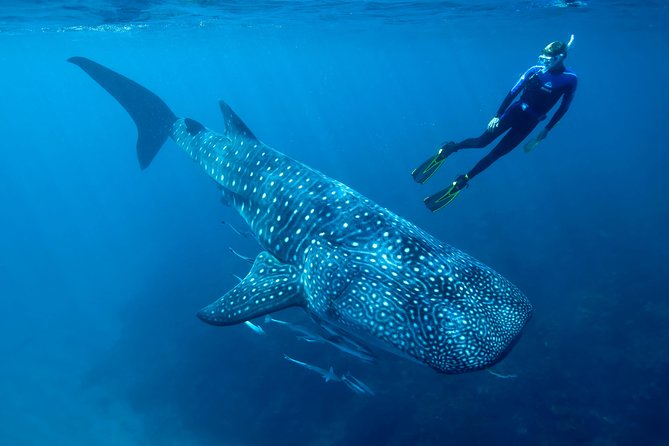

Each year, one of the ocean’s great feeding events plays out just off the Yucatán Peninsula, as hundreds of whale sharks, the largest fish on the planet, gather in the plankton-rich waters north of Isla Mujeres and Isla Contoy. For travellers keen to witness it, the good news is that the aggregation happens within day-trip distance of Cancún, Isla Mujeres and the wider Riviera Maya. The less good news, if this is on your list for 2026, is that the season is closing right now. Here’s what’s actually involved, and how to plan around it, this year or next.
Mexico’s Whale Shark Season, and Why the Dates Are Fixed
Unlike a lot of wildlife encounters that shift loosely with the weather, whale shark season around Cancún is a hard, regulated window rather than a rough guideline. Mexico’s national protected areas commission, CONANP, sets and enforces the official season each year under the region’s whale shark refuge management plan, and operators are not permitted to run swim tours outside those dates. For 2026, that window runs from roughly mid-May through to mid-September, which means anyone reading this in the second week of September is looking at the final few days of the season rather than the start of it.
The reason the dates are fixed rather than flexible comes down to biology, not bureaucracy. Whale sharks follow a seasonal plankton and fish-egg bloom that forms in the warm water north-east of the Yucatán each year. As water temperatures shift through September, the bloom thins out and the sharks move on to deeper, more dispersed feeding grounds, at which point there’s simply nothing reliable left for a tour boat to find.
Isla Mujeres: The Shortest Run to the Aggregation
Isla Mujeres has become the preferred departure point for a lot of operators, largely because of geography rather than marketing. Boats leaving from the island typically reach the feeding grounds in under an hour, roughly half the travel time of a tour departing from the Cancún hotel zone marina. For travellers based in Cancún or along the Riviera Maya, that shorter run can be the difference between a five-hour outing and something closer to a full day on the water.
Isla Contoy and the waters off Holbox, further north again, round out the main aggregation zone. Sightings across this broader area follow the same seasonal pattern, and which specific stretch of water the sharks are concentrated in in a given week can shift with conditions, which is exactly why an experienced local operator who’s tracking the aggregation day to day matters more here than in most wildlife-watching settings.
What a Whale Shark Encounter Actually Involves
This isn’t scuba diving. Swimming with whale sharks in Mexican waters is snorkel-only under CONANP regulations, with strict group-size limits and a set number of swimmers in the water with each animal at a time. A typical outing involves an early departure, a boat ride out to wherever the aggregation is currently sitting, a couple of short guided swims alongside the animals, and a return trip that usually includes a stop at Isla Mujeres itself. Whale sharks are filter feeders, entirely harmless to swimmers despite their size, often reaching over ten metres long, and the encounters are supervised closely enough that the experience is accessible to confident swimmers without any diving certification.
Because the activity is tightly permitted, it’s worth booking through an operator who holds current CONANP authorisation rather than an unlicensed boat offering a cut-price trip. Aside from the legal and safety issues with an unpermitted operator, the licensed feeding zones are also where the sharks are reliably concentrated, so a properly permitted tour is generally the better experience as well as the safer one.
Peak Timing Within a Short Season
Even within the official window, sightings aren’t evenly spread. July and August are consistently the strongest months, when the plankton bloom is at its densest and the aggregation is at its largest, while the edges of the season, mid-May and mid-September, carry more variability. None of that helps anyone planning a trip in the closing days of this year’s season, but it’s useful context for travellers weighing up next year’s dates: booking squarely in the middle of the season gives noticeably better odds than chasing the very start or end of the window.
Pairing a Whale Shark Trip With a Broader Day on the Water
Because the whale shark encounter itself typically takes up the morning, a lot of travellers build the rest of the day around it rather than treating it as a standalone activity. A stop at Isla Mujeres for lunch and a swim at Playa Norte is a common add-on, and for anyone wanting the day to feel less like a scheduled tour and more like a private outing, a separate private charter built around Isla Mujeres, Cancún or further down the coast toward Tulum and Puerto Aventuras is a popular way to extend the experience beyond the regulated swim window itself.
Riviera Charters, running motorboat and sailboat trips across Cancún, Tulum, Puerto Aventuras and Isla Mujeres, is one of the operators travellers use to build exactly that kind of day, pairing a licensed whale shark swim earlier in the day with a private, unhurried afternoon on the water rather than heading straight back to the hotel once the tour boat docks.
Planning Ahead for Next Season
For anyone reading this after mid-September, the 2026 whale shark window has effectively closed, and the honest advice is to start planning for next year’s season rather than hoping for a late booking that a licensed operator won’t be able to offer. Because the dates are set annually and enforced strictly, locking in travel for June through August next year, and booking a reputable, permitted operator well ahead of the peak weeks, is the most reliable way to make sure a Mexico trip actually lines up with the aggregation rather than narrowly missing it.
Whichever year the trip falls in, the combination of a genuinely rare wildlife encounter and a stretch of coastline that’s a worthwhile destination on its own terms, from Cancún yacht rentals down through Isla Mujeres, Puerto Aventuras and Tulum, means a whale shark season booking rarely needs to be the only reason for the visit. For travellers happy to plan around the season’s fixed dates, it’s one of the more remarkable days on the water anywhere in the Caribbean.

Comments are closed.