
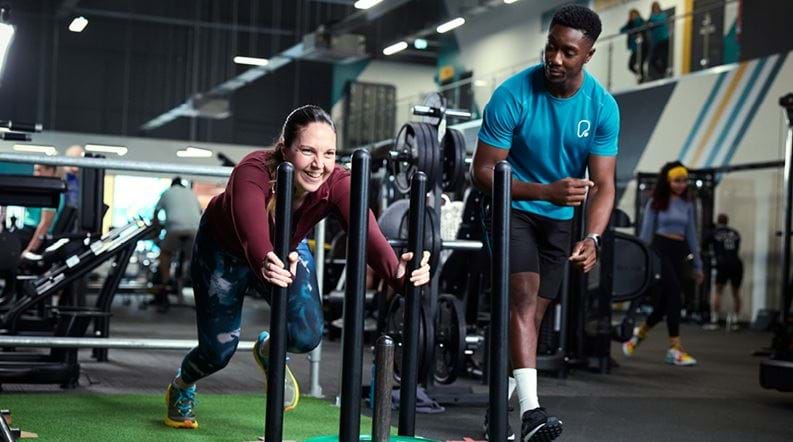

Returning from business travel can create a misleading sense of urgency. A knowledgeable fitness trainer singapore travellers consult does not try to compensate for missed sessions with an unusually hard workout. The first priority is to assess how travel affected sleep, hydration, movement and readiness.
One week away rarely causes a meaningful loss of fitness. The larger concern is that the client returns tired, stiff and eager to prove that nothing has changed.
Travel Fatigue Is More Than Jet Lag
Even regional travel can disrupt normal routines. Early airport departures, long periods of sitting, unfamiliar beds and irregular meals can affect recovery.
The client may not feel sleepy but can still show reduced coordination, slower reactions or unusually high effort during familiar exercises.
A trainer should consider the entire travel pattern, including flight timing, work demands and the quality of sleep after returning.
Do Not Test Fitness Immediately
The first session back is a poor time for maximum lifts, exhaustive intervals or personal-best attempts. Performance may be temporarily reduced for reasons unrelated to actual fitness.
Testing creates little useful information if the conditions are abnormal. It may also produce unnecessary soreness that affects the rest of the week.
The better objective is to re-establish movement quality and obtain information about current readiness.
Use the Warm-Up as an Assessment
Familiar warm-up exercises give the trainer a useful comparison with normal sessions. The client’s balance, range, breathing and coordination can be observed without high load.
If movement improves steadily during the warm-up, the client may be ready for a moderately challenging session. If stiffness and sluggishness persist, further reduction may be appropriate.
The warm-up should guide the plan rather than merely delay the original workout.
Reduce Volume Before Removing Every Exercise
Clients often benefit from performing familiar movements with fewer working sets. This maintains programme continuity while reducing the recovery demand.
For example, an exercise normally completed for four sets may be performed for two or three. The load can remain moderate if technique and speed are stable.
Reducing total volume is often less disruptive than replacing the entire programme with unrelated light exercises.
Keep Repetitions Away From Failure
Travel-related fatigue can become visible only after several repetitions. A load that initially feels normal may slow suddenly.
The trainer should leave a comfortable number of repetitions in reserve during the first session. This reduces the chance that one hard set creates disproportionate fatigue.
Stable repetitions provide more useful information than a final forced repetition.
Restore Range Gradually
Long periods of sitting can make hips, ankles and the upper back feel temporarily restricted. Forcing maximum range immediately is unnecessary.
The trainer can begin with a comfortable range and allow it to expand as the client warms up. Loaded mobility through controlled exercises may be more useful than an excessively long stretching routine.
The objective is to regain familiar movement, not to correct every sensation created by travel in one session.
Hydration Needs Time
Drinking a large amount of water immediately before training may cause discomfort without fully correcting low intake during travel.
Regular fluid consumption across the day is more practical. The client should also consider whether alcohol, high-sodium meals or hot-weather exposure affected hydration.
Electrolyte drinks may be helpful in selected situations, but they are not a substitute for steady fluid intake and normal meals.
Return to Normal Meal Timing
Travel often produces late dinners, airport snacks and long gaps between meals. The first days back should focus on restoring a predictable pattern rather than attempting an aggressive dietary correction.
Skipping meals to compensate for travel eating can reduce training energy and create further overeating later. A normal meal containing carbohydrate, protein and fluids may support the return session better.
Clients with complex dietary or medical needs should seek guidance from an appropriately qualified professional.
Manage the First Week, Not Only the First Workout
The client may feel excellent during the first session and develop delayed fatigue later. Planning the entire return week prevents sessions from being stacked too closely.
A sensible sequence may involve a moderate strength session, a lower-intensity day and then a gradual return to normal training. The exact structure depends on travel duration and the client’s response.
One successful workout does not prove that full weekly volume is immediately appropriate.
Do Not Chase Missed Workouts
Training sessions are not debts that must be repaid. Trying to fit all missed work into the return week increases fatigue without recreating the adaptations that would have occurred.
The trainer should resume the programme from the most logical point. Some planned sessions can simply be omitted.
Long-term consistency is not damaged by leaving a travel week incomplete.
Re-establish Sleep Before Increasing Demand
Sleep after returning may remain disrupted even when the client is back in the usual bed. Early waking, late sleepiness or irregular appetite can continue for several days.
Training intensity should rise as sleep and daytime energy normalise. Caffeine can improve alertness temporarily but should not be used to conceal persistent sleep disruption.
At True Fitness Singapore, familiar equipment and surroundings can make the return easier because fewer new variables are introduced during the session.
The First Session Should Create Momentum
A good return workout leaves the client feeling reconnected with the programme, not punished for travelling. It provides enough challenge to feel productive while preserving capacity for the next session.
The trainer uses movement quality, effort and post-session recovery to determine how quickly normal loading should resume.
After a week of flights and hotel sleep, restraint is not lost progress. It is the fastest way to restore consistent training without turning temporary travel fatigue into a longer interruption.

Comments are closed.